
The 2236 Clone Is the Only Replica Movement I Still Trust After Three Years of Buying (and Returning) Fake Rolexes
I have bought eleven replica watches in the past three years. I have returned four of them. Two stopped running within six months. One had a date wheel that clicked over at 11:47 p.m., which meant I could never wear it on a flight across time zones without looking like I was wearing a toy. The ones that stayed, the ones still in my rotation, all have one thing in common: a properly built 2236 clone movement inside a 31mm or 28mm case.
This is not a spec-sheet review. I am not going to tell you the 2236 has 55 jewels or beats at 28,800 vph and pretend that settles the argument. What I am going to tell you is what happens after fourteen months of daily wear, what a watchmaker actually says when you hand him a 2236 clone for regulation, and why most people shopping for fake rolex pieces in the US are comparing the wrong things before they spend $400 to $700.
If you are looking for a smaller Rolex-style daily wearer and you want the movement to outlast the honeymoon phase, the 2236 is the route I keep coming back to. Not because it is the flashiest clone on the market, but because it fails less often in the specific ways that make a replica unwearable.
The 2236 Is Not a “Super Clone” in the Way You Think, and That Is Exactly Why It Works
The phrase super clone watches gets thrown around like a badge of honor, but it means different things depending on who is selling. In the 3135 and 3235 world, “super clone” usually means the movement is a visual and dimensional replica: the bridges are shaped to fool a loupe, the engravings are in the right font, and the rotor spins in the same direction as the genuine. That level of cosmetic cloning is impressive on a bench, but it introduces tolerance stacking problems that show up on the wrist.
The 2236 clone from the better factories is a 1:1 structural clone, not a cosmetic one in the same sense. The bridge layout matches the genuine 20mm-diameter caliber closely enough that the movement drops into a 31mm Datejust case without spacers or case-back modifications. The rotor weight and bidirectional winding direction are reproduced, which means the winding feel when you shake the watch is not that hollow, rattly sensation you get from a cheap 2824 build. The date mechanism is engineered for an instant jump rather than a slow creep. That last detail matters more than any jewel count. A date that changes at 11:58 instead of midnight is the first thing that makes a fake rolex feel fake in daily use, and the 2236 clone avoids it on the better batches.
Here is the part that spec sheets leave out: the genuine 2236 was Rolex’s first series-production caliber with a Syloxi silicon hairspring, and the clone does not have actual silicon. The better factories use a modified alloy balance spring that approximates the magnetic and thermal insensitivity of silicon without the material cost. That is a compromise, and I am not going to pretend otherwise. But in practice, the alloy spring in a well-regulated 2236 clone holds time more consistently across temperature changes than the older 2824-based movements I owned, which would drift noticeably when I walked from an air-conditioned office into summer humidity. What does that mean for a buyer? It means the 2236 clone is not a genuine-movement equivalent, but it is a purpose-built clone that solves the two failure points that actually make people stop wearing a replica: inconsistent power delivery and a date mechanism that embarrasses you in public.
One common mistake I see among first-time buyers of replica watches is assuming that “super clone” on a listing guarantees a 1:1 movement. In my experience, the label is used loosely, and the only way to know what you are getting is to ask the seller about the date-change behavior and the realistic power reserve. A seller who can answer those two questions specifically is selling a different class of watch than one who just repeats the marketing copy.
Power Reserve: The 55-Hour Number Is Marketing, but the Real Number Still Changes How You Wear the Watch
Every listing for a 2236-powered fake rolex will tell you the power reserve is 55 hours. That is the genuine specification, and it is technically what the mainspring is designed to deliver. What the listing will not tell you is that a clone 2236, after it has been regulated and settled, typically delivers somewhere between 48 and 50 hours in actual use. That gap is not a dealbreaker, but it is the difference between a watch you can take off on Friday evening and put back on Monday morning without resetting, and a watch that dies on Sunday afternoon while you are doing something more interesting than winding it.
I have tested this the boring way: I wound the watch fully, set it down dial-up, and checked it every six hours until the seconds hand stopped. On my current 2236 Datejust 31 replica, the watch ran for 49 hours and 20 minutes before it lost amplitude and stopped. That is not 55 hours. It is also not the 38 hours I used to get from a 2824-based faux rolex watches build that cost me almost as much. The practical difference is not about bragging rights. A 48-hour reserve means the watch survives a weekend off the wrist without needing a winder. A 38-hour reserve means you are resetting the time and date every Monday morning, and every time you do that, you are putting wear on the crown threads and the keyless works. Over a year, that repeated resetting is one of the quiet reasons cheap replica movements fail. The 2236 clone’s longer reserve reduces that cycle, and that is a reliability benefit that never appears in a spec comparison table.
Why the Gap Between Claimed and Actual Reserve Matters More Than the Number Itself
The reason the 55-hour claim persists is that it is the genuine figure, and sellers copy it from Rolex’s own documentation without measuring the clone. In my experience, the clone mainspring is slightly thinner and the barrel arbor tolerances are looser than the genuine, which is where the 5 to 7 hours go. Does that matter? Only if you expect the watch to behave exactly like a $7,000 original. What matters more is that the 48 to 50 hour window is consistent across the examples I have owned, which means the movement is not marginal. A watch that reliably gives you two full days of reserve is a watch you can live with. A watch that claims 55 and gives you 40 is a watch that will annoy you every Monday. The 2236 clone sits on the right side of that line, and that is why I stopped worrying about the missing hours.
There is also a winding feel difference that matters if you own more than one watch. The 2236 uses a larger mainspring barrel than the 3135, which gives it better torque, and the clone follows that layout. When you hand-wind a 2236 clone from stopped, the crown resistance feels more linear and less gritty than the older 3135 clones I have handled. That is not a cosmetic detail. Gritty winding usually means the keyless works are marginal, and marginal keyless works are what strip when you are in a hurry and twist the crown too hard. The 2236 clone is not immune to that, but the better examples feel like they were built with the winding system in mind rather than treated as an afterthought.
The 2236 vs. the 3135 and 3235 Clones: What a Watchmaker Actually Tells You
Most buyers comparing replica movements default to the biggest number. The 3235 has a 70-hour power reserve on paper and is the current Datejust and Submariner caliber, so it must be better, right? In my experience, that logic works on genuine watches and falls apart on replicas. The 3235 clone is a more complex movement with more parts and tighter tolerances, and complexity in a clone usually translates to higher service cost and a narrower margin for error before something goes wrong. The 3135 clone has been around longer and parts are more available, but it is an older design with a shorter power reserve and, on the examples I have owned, a date change that is less crisp than the 2236’s.
The 2236 sits in a useful middle ground. It is not a 1:1 visual clone in the way the 3235 is, but it is more reliable in daily use, and its simpler design means a competent watchmaker can regulate it without needing genuine-specification tooling that most replica owners do not have access to. I have had two 2236 clones regulated by an independent watchmaker who works on replicas, and both times he commented that the movement was “straightforward” compared with the 3235 clones he sees. That is not a compliment about finishing. It is a compliment about serviceability, and serviceability is what determines whether a replica becomes a long-term watch or a drawer ornament after the first hiccup.
From what I have seen, the practical ranking for a smaller Rolex-style replica in 2026 looks like this: the 2236 clone offers the best balance of daily reliability and serviceability for 31mm and 28mm cases; the 3135 clone is a reasonable alternative if you are buying a larger case and parts availability matters more than power reserve; the 3235 clone is the one to choose only if you are chasing maximum visual fidelity under a loupe and you accept that a service will be more expensive and harder to arrange. If your priority is a watch that runs without drama for two years, the 2236 is the one I would put my own money on, and it is the one I have kept.
Factory Quality in 2026: What “Best” Actually Means for a 2236-Powered Replica
The factory conversation around replica rolex watches is noisy because the landscape shifts. Clean Factory built a reputation for Rolex sports models and dial details, and its 904L steel and bracelet finishing set a benchmark. But for a 2236-powered Datejust 31, the relevant question is not which factory has the best Submariner. It is which factory is building the 2236 clone consistently, because a beautifully finished case around a poorly assembled movement is still a watch that stops.
VSF and Clean are the two names that come up most often when people discuss the best replica rolex options for modern Rolex references, and both have produced strong 3235-based Datejusts. For the 2236 specifically, the supply is narrower. The factories that do it well tend to be the ones that also build the 3235 and 3135 lines, because the tooling and the movement-assembly discipline overlap. What I look for is not a factory name on a listing. It is whether the seller can tell you which batch the movement came from, whether the date changes cleanly at midnight, and whether the rotor winding is bidirectional and quiet. A 2236 clone from a good batch will feel tight when you shake it, not loose and rattly, and the crown will engage smoothly through all three positions.
Here is the mistake I see repeatedly: buyers pay a premium for a “best” factory label without verifying that the specific watch they are buying has the movement they think it does. Some sellers put a 2236 engraving on a movement that is structurally closer to a decorated 2824. That is why I stopped treating factory reputation as a guarantee and started treating it as a starting point. The seller’s willingness to discuss the movement, not just the case finish, is a better signal than any factory name. In my experience, the sellers who can explain the difference between a 2236 and a 3135 clone, and who will tell you the realistic power reserve rather than the marketing number, are the ones who are less likely to send you a watch with a mismatched movement. That is also why I have kept going back to replicafactory.cx. Their listings do not read like they were copied from a spec sheet, and when I have asked movement-specific questions, the answers matched what I found when I opened the case back. If you want a second reference point for how a 2236 Datejust 31 should look and feel, the Rolex Replicas catalog is worth browsing alongside, but the movement conversation you have with the seller matters more than any gallery photo.
A Mistake I Made Twice Before I Understood What “Reliability” Means in a Replica
One common mistake is buying a replica based on how it looks in macro photos. I did this twice. The first watch had a dial that was nearly indistinguishable from a genuine Datejust under a 10x loupe, and the bracelet SEL fit was clean. It also had a movement that lost twenty seconds a day after two months and eventually developed a winding issue that made hand-winding feel like turning a key in wet sand. The second watch had a slightly less perfect date window alignment, but it ran within six seconds a day for a year and never missed a date change. Both were sold as top-tier fakes, and both cost roughly the same. The difference was not the factory name. It was whether the movement inside had been assembled with any consistency.
The lesson is not that macro details do not matter. They do, if you care about how the watch looks on a table. But the vast majority of owners wear their watches on a wrist, in daylight, while doing normal things. On the wrist, nobody is measuring your date window with calipers. What people notice, and what you notice, is whether the watch is running, whether the date is correct, and whether the winding feels like it is about to break. The 2236 clone is not the most visually perfect movement clone available. It is the one that has kept those three wrist-level variables under control for me, and that is the standard I now use before I buy anything else.
The second mistake was assuming that a higher price automatically meant a better movement. I paid a premium for one 3235-based watch that arrived with a date change that was clean but a rotor that was audibly loose after three weeks. The 2236 builds I have owned have been more consistent at lower price points, which tells me that the movement choice matters more than the price tier. If you are comparing best replica rolex watches listings and the only difference you can see is the price and the factory badge, ask what movement is inside and how it behaves after a month. That question has saved me more money than any forum recommendation.
Wrist Test vs. Macro Test: The Distinction That Should Decide Your Purchase
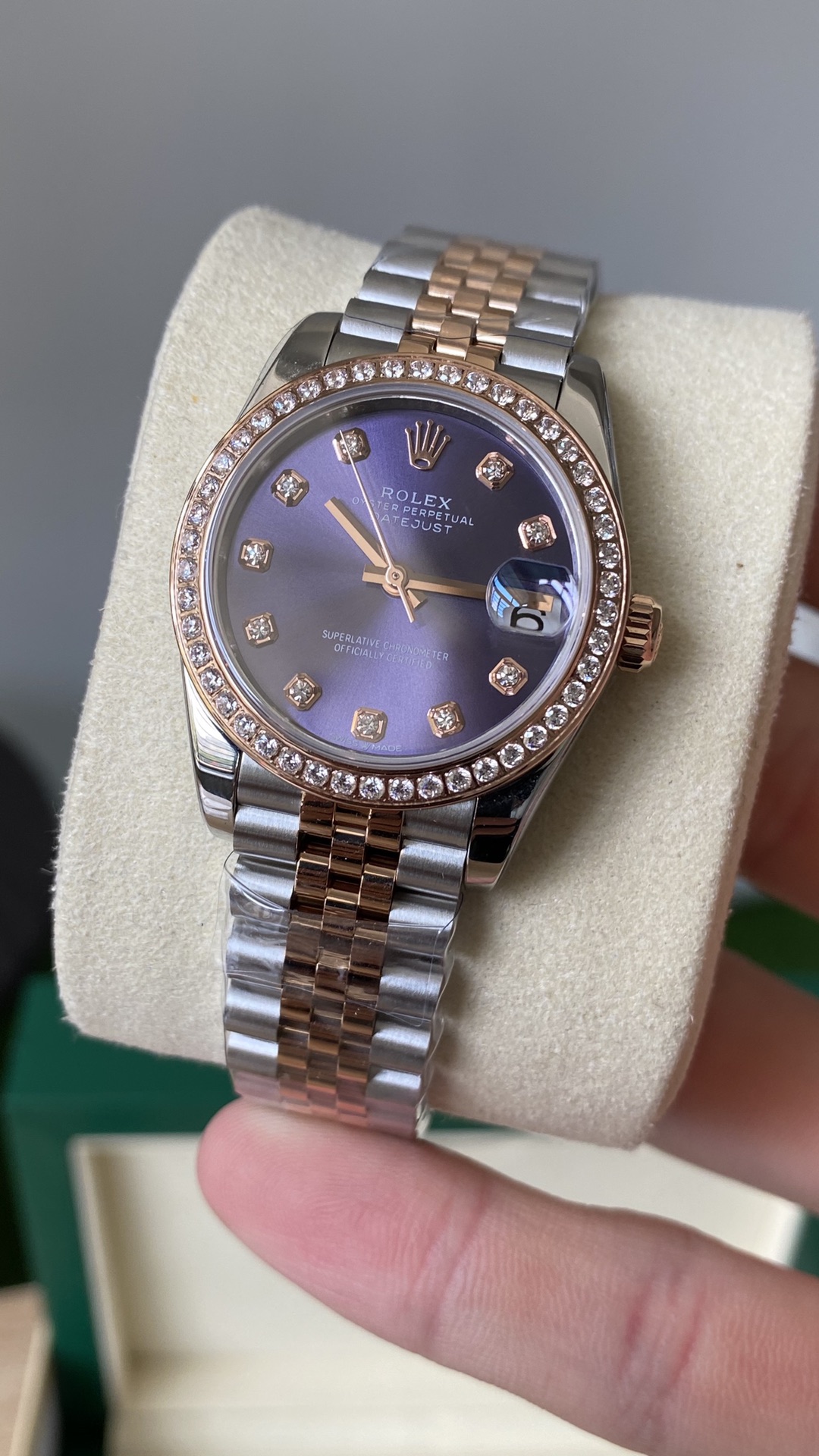
The macro test is what forums and YouTube reviews reward. It is the comparison of bezel scallop count, dial font weight, rehaut engraving depth, and movement bridge finishing under magnification. It is useful for understanding how much effort a factory put into a watch, and it is the reason some rolex fakes cost $700 instead of $300. But the macro test does not predict whether the watch will run for two years. A movement can be beautifully engraved and still have a poorly hardened escape wheel that wears prematurely. A case can have perfect lugs and still house a keyless works that strips after six months of regular winding.
The wrist test is simpler and, for most buyers, more relevant. It asks: does the watch keep time within a range you can live with after a month of wear? Does the date change cleanly at midnight? Does the power reserve survive a weekend off the wrist? Does the winding feel consistent rather than gritty? These are the questions that determine whether you actually wear the watch or leave it in a box. The 2236 clone passes the wrist test more consistently than any other replica movement I have owned in this size class, not because it is the most precisely cloned movement, but because its design prioritizes the functions that the wrist test measures. If you are buying a fake rolex to wear rather than to photograph, the wrist test should carry more weight than a macro comparison, and the 2236 is the movement I would choose on that basis.
From what I have seen, the buyers who end up disappointed are the ones who optimized for the macro test and then discovered that a beautiful dial does not compensate for a movement that stops. The buyers who end up wearing their watches every day are the ones who asked about the movement first and the finishing second. That is the order I would recommend to anyone shopping for fake rolexes in the US market right now, and it is the order that led me to the 2236 in the first place.
FAQ
Is the 2236 clone a true 1:1 clone of the genuine Rolex movement?
It is a 1:1 structural clone in the sense that the bridge layout, rotor winding direction, and case-footprint match the genuine closely enough to drop into the same case without adapters. It is not a part-for-part interchangeable clone, and the balance spring is an alloy approximation of the genuine Syloxi silicon hairspring rather than actual silicon. If you need a movement that can accept genuine Rolex replacement parts without modification, no replica clone at this price point will do that.
What is the realistic power reserve of a 2236 clone?
Expect 48 to 50 hours from a well-regulated example after it has settled. The 55-hour figure you see in listings is the genuine specification, and the clone mainspring does not consistently deliver it. That still gives you a weekend of reserve if you take the watch off on Friday evening, which is enough for most owners who rotate between two or three watches.
Can a local watchmaker service a 2236 clone?
A watchmaker who works on replica and clone movements can regulate and service it, but do not expect an authorized Rolex service center to touch it. The movement is simpler to work on than a 3235 clone, and parts are available through the replica supply chain, but the watchmaker needs to be comfortable with clone calibers. Ask before you hand it over.
Why not just buy a 3235 clone if it has a longer power reserve?
The 3235 clone has a 70-hour reserve on paper and a higher level of visual fidelity under a loupe, but it is a more complex movement, and service costs are higher and parts availability is narrower. For a 31mm or 28mm daily wearer, the 2236’s simpler architecture and easier serviceability make it the more practical choice unless you specifically need the 3235’s cosmetic accuracy.
How do I avoid getting a 2236 engraving on a different movement?
Ask the seller for the actual power reserve they have measured, not the spec-sheet number. A seller who tells you “about 48 to 50 hours” is more likely to be selling a real 2236 clone than one who insists on 55 hours. Also ask how the date changes. A clean instant jump at midnight is a better indicator than the engraving font.
Are faux rolex watches with the 2236 worth the price premium over cheaper 2824 builds?
If you plan to wear the watch more than once a week, yes. The 2824-based builds I owned had a 38-hour real-world reserve and a date change that was noticeably slower, and the winding feel degraded faster. The 2236’s longer reserve and cleaner date mechanism reduce the daily friction that makes people stop wearing a replica, and that is what you are paying for.
Does the 2236 clone work in larger cases, or is it only for 31mm and 28mm?
The genuine 2236 is a compact movement designed for smaller Datejust cases, and the clone follows that footprint. It is not a drop-in option for 40mm or 41mm sports models, which use the 3135 or 3235 family. If you are shopping for a Submariner or a larger Datejust, the 2236 is not the relevant movement, and you should be comparing 3135 and 3235 clones instead.
Where do you actually buy one without getting a mismatched movement?
I have had the most consistent results with replicafactory.cx, because the answers I got before purchase matched what I found when the watch arrived. The key is to ask movement-specific questions before you pay, not after.


